Amboseli‘s elephant population is one of the most studied in Africa, and the park consistently delivers some of the most rewarding elephant viewing anywhere in Kenya. But knowing where to go inside the park, and when, makes a significant difference between catching a glimpse at a distance and spending real time with family groups in good conditions.
This guide covers the habitat zones that matter most for elephant viewing, the timing logic that experienced guides use, and the planning considerations that help structure a genuinely productive elephant safari.
Why Amboseli Works So Well for Elephants
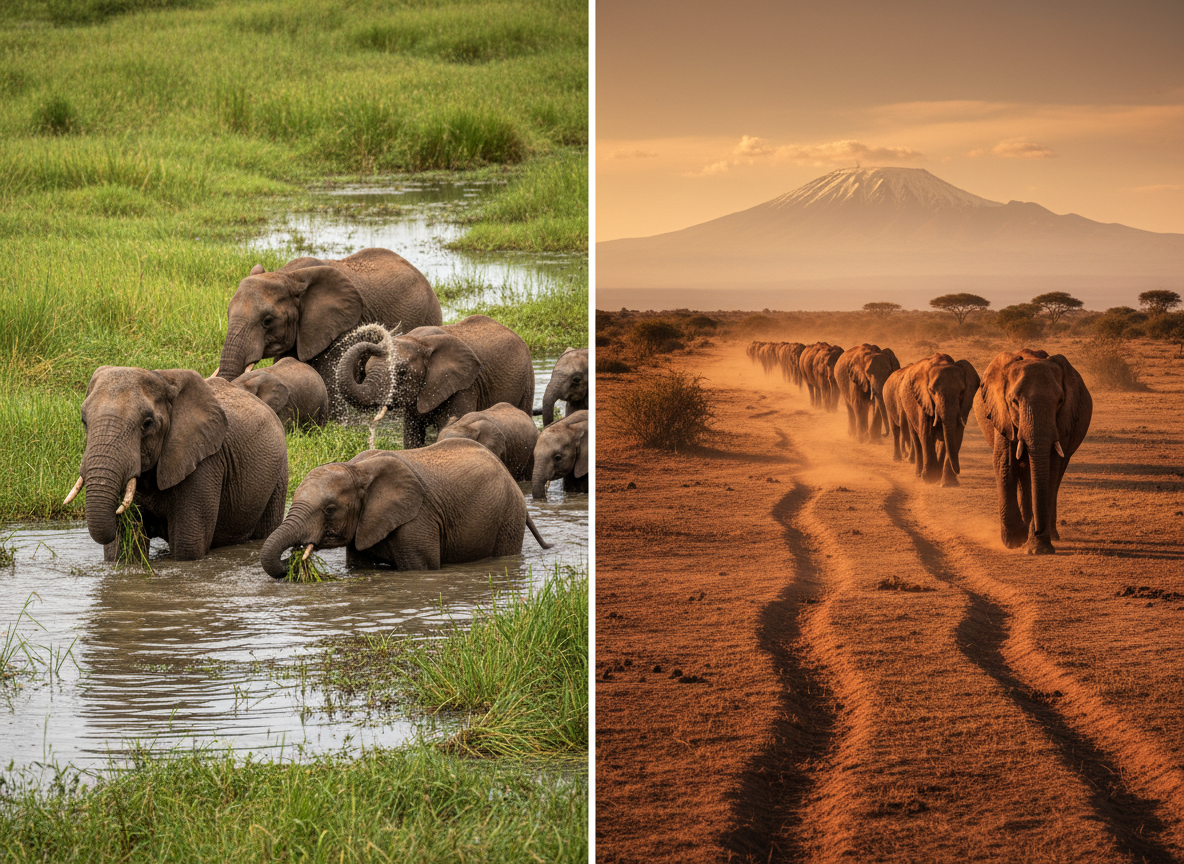
The core reason Amboseli is so dependable for elephant viewing is hydrology. The park’s permanent swamps, fed by underground water flowing from Kilimanjaro’s glaciers and snowmelt, provide reliable water and green forage year-round. Even in the driest months, elephants have reason to stay in the park rather than moving further afield in search of water.
The two main swamp systems, Longinye and Ol Tukai, sit at the heart of this reliability. They are the single most important factor in explaining why Amboseli works as an elephant destination when other parks might disappoint.
Around those wetland cores, the wider park landscape of open grasslands, dried lakebed flats, and woodland edges creates the movement corridors and feeding areas that produce the dynamic elephant viewing the park is known for.
The Swamps: Your Most Important Starting Point
If you want to see elephants in Amboseli, start your drives near the swamps.
The Longinye and Ol Tukai swamp areas consistently attract elephant movement because:
- They hold green vegetation through dry periods when the surrounding plains are parched
- Family groups return regularly to drink, bathe, and feed in and around the water margins
- The visibility from the swamp edge is often excellent, with open sightlines into the water and across nearby ground
Early-morning drives that head directly for swamp-edge areas typically produce elephant sightings quickly. A vehicle positioned at the right point before the animals have moved can encounter herds in close range with good light.
Ol Tukai Area: Classic Elephant Viewing Territory
The Ol Tukai zone is one of the most consistently productive elephant areas in the park. The combination of swamp proximity, green vegetation, and well-established elephant movement patterns makes it a reliable focus for any elephant-first itinerary.
The area also produces some of Amboseli’s most photographically rewarding conditions. The vegetation framing, clear sightlines, and potential for Kilimanjaro in the background create the kind of scene the park is famous for.
Staying at a camp or lodge in or near Ol Tukai puts you in efficient range of these areas, though any well-positioned property in the park can access this zone with an early start.
Open Plains: The Other Half of the Elephant Story
The swamps are where elephants concentrate, but the open plains are where elephant viewing becomes something more visual and dynamic.
As elephants move between feeding grounds, water, and resting areas, they cross the open grassland of the park interior. These crossings are often the most memorable encounters: large groups in motion across flat, open ground, sometimes with Kilimanjaro visible on the horizon.
Open-plains viewing tends to produce:
- A sense of scale that wetland-edge sightings do not always give
- Easier observation of family social behaviour and inter-herd interactions
- The classic Amboseli photographic approach: elephants moving through open country with mountain backdrop
An itinerary that covers both swamp areas and open plains gives you the full range of what Amboseli elephant viewing can offer.
Best Time of Day to See Elephants
The most productive windows are early morning and late afternoon.
In the morning, elephants are often active and moving between resting areas and feeding zones. Light is soft and directional, which helps photography significantly. Kilimanjaro’s summit is most likely to be visible before cloud builds around mid-morning.
In the late afternoon, activity picks up again as temperatures fall. Elephant families often move toward water at this time, and the golden-hour light produces strong photographic conditions.
Midday is the least productive window for elephant behaviour, though wetland-edge sightings are still possible when animals seek shade or water in the heat. A two-drive day structure, morning and afternoon, makes the most of the best timing windows.
Dry Season vs Greener Periods
Both seasons have real advantages for elephant viewing, though the character of the experience differs.
Dry season (roughly June to October and January to February):
- Wildlife concentrates near water, making swamp-area viewing particularly productive
- Less vegetation means elephants in open country are easier to spot and observe
- Dust creates its own photographic challenges but also produces dramatic atmospheric light
Greener months (approximately March to May and November to December):
- The park is more scenic and less crowded
- Elephants spread more widely, which can require more driving to locate them
- Family groups with young calves are more common in the post-rain period when vegetation is lush
Neither season is fundamentally better for elephant viewing. Dry season often wins on efficiency and concentration. Greener months often win on atmosphere, scenery, and the possibility of seeing young calves.
Photography Considerations
For photographers, the best elephant positions combine several factors:
- Open approach that does not require close approach through dense bush
- Sufficient distance to show the herd in context rather than filling the frame with one animal
- Background potential, whether vegetation, sky, or mountain
- Low-angle light, which means early morning and late afternoon
The swamp edges and open plains both produce excellent photographic conditions. The Ol Tukai area is particularly well-regarded among photographers who have visited multiple times. It repeatedly delivers the visual elements that make Amboseli elephant photography distinctive.
Telephoto lenses are an advantage but not a requirement. Amboseli elephants are habituated to vehicles and often allow quite close approach, which makes the park accessible for telephoto and standard zoom photographers alike.
Can You See Elephants Near Camp?
Some properties in Amboseli have elephants passing through or near the camp perimeter. This happens particularly at lodges and camps positioned along known elephant movement corridors.
Near-camp sightings extend the feeling of being surrounded by elephant country and can produce unusual close-quarters encounters. They should be understood as bonuses rather than alternatives to park game drives. The main elephant viewing happens in the park itself, with a vehicle and a guide who knows the terrain.
How Many Drives Do You Need?
For most travellers, two nights in Amboseli is enough for strong elephant viewing. Three nights is better for photographers, for those who want repeated Kilimanjaro attempts, or for anyone who wants to explore different parts of the park more thoroughly.
Elephant viewing in Amboseli is reliable enough that the question is less “will I see elephants?” and more “how much time do I want to spend watching them properly?” That is a genuine luxury that not every safari destination offers.
Quick Reference: Best Elephant Areas
| Zone | Why It Works |
|---|---|
| Longinye swamp | Permanent water, reliable year-round elephant concentration |
| Ol Tukai wetland area | Strong elephant presence, classic photography conditions |
| Open plains | Movement viewing, large group encounters, mountain backdrop potential |
| Swamp edges | Feeding and bathing behaviour, family groups at close range |
| Early morning circuits | Best timing for activity, movement, and photographic light |
Common Mistakes to Avoid
The biggest mistake is expecting a single named spot to guarantee the perfect elephant sighting on every drive. Elephants move across the park according to their own rhythms, weather conditions, and seasonal patterns. A guide who understands the current movement patterns and adjusts routes accordingly will produce far better results than one who follows a fixed circuit.
The more productive approach:
- Know the core habitats and why they matter
- Drive at the right times of day
- Let the guide move between swamp areas and open plains based on what is happening that day
- Allow time across multiple drives rather than expecting one definitive encounter
Explorer Notes
A few practical details that affect elephant viewing specifically:
- The Amboseli Elephant Research Project, one of the world’s longest-running wildlife studies, has documented individual elephants for decades. Some guides have deep knowledge of specific families, their range patterns, and their histories. A guide with this level of knowledge transforms a standard elephant encounter into something far more interesting.
- Kilimanjaro and elephants appear together in photographs most reliably at dawn, before cloud builds on the mountain. Plan at least one very early start if photography is a priority.
- Park fees in Amboseli are paid per person per day. A longer stay does not necessarily increase fees proportionally if days are structured efficiently. Confirm current fee structures before your trip.
- Elephant numbers in the park fluctuate seasonally as some groups move outside the park boundaries. During some dry-season periods, very large aggregations of elephants from a wide area may concentrate in Amboseli, producing unusual density of sightings.
Conclusion
Elephants in Amboseli are found most reliably near the swamps, particularly Longinye and the Ol Tukai area, and on the open plains as they move between habitats. Early morning and late afternoon are the most productive times. Dry-season conditions concentrate them near water; greener months spread them more widely across the park.
A structured approach, covering swamp areas and open ground across multiple early-morning drives, consistently produces the quality of elephant viewing that makes Amboseli one of Kenya’s most distinctive safari destinations.
Related Reading
For more on planning your Amboseli trip, see our guides on what animals you can see in Amboseli, what to wear in Amboseli, and how to reach Amboseli from Nairobi. For broader Kenya safari planning context, trunktrailssafaris.com covers destination guides, accommodation options, and route planning across the main parks.
Every trip described here can be tailored: dates, budget, camps, and pace built around you.
Get a Personalised Safari